Egyptian hieroglyphs, explained.
Explore the language, writing system, history, decipherment, and meaning behind ancient Egyptian hieroglyphic writing.

Why Ancient Egyptians Used Hieroglyphs: Religion, Authority, Memory, and Monumental Writing
Ancient Egyptians did not keep using hieroglyphs because they lacked an easier way to write
Read article Blog
Manuel de Codage Explained: How Egyptologists Encode Hieroglyphic Text and Layout
Before Egyptian hieroglyphs could be typed directly as Unicode characters, Egyptologists still needed a way to enter them into computers
 Blog
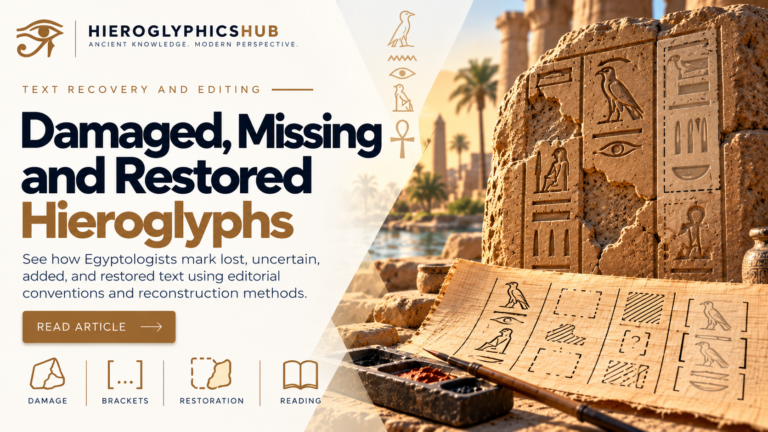
How Egyptologists Mark Damaged, Missing, and Restored Hieroglyphs
Ancient Egyptian inscriptions rarely survive exactly as they were written
 Blog
How Did Ancient Egyptians Write “Egypt”? Kemet, the Two Lands, and the Modern Name Egypt
There was no single ancient Egyptian word that matches every use of the modern name Egypt
 Blog
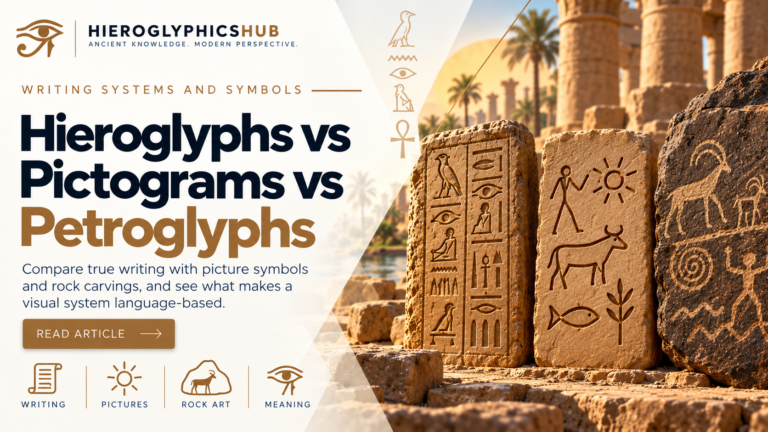
Hieroglyphs vs Pictograms vs Petroglyphs: What Actually Counts as Writing?
Egyptian hieroglyphs look like pictures
 Blog
Who Could Read and Write in Ancient Egypt? Literacy, Scribes, and Audiences
Most ancient Egyptians probably could not read and write fluently
 Blog
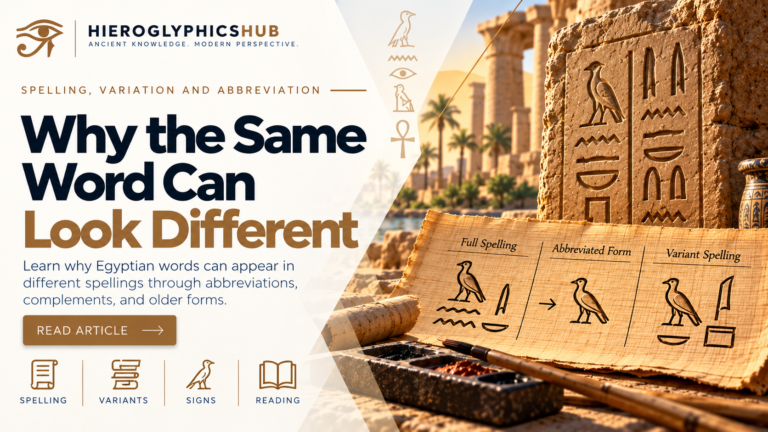
Spelling Variation and Abbreviation in Egyptian Hieroglyphs: Why the Same Word Can Look Different
The same Egyptian word can appear in two inscriptions and look surprisingly different
 Blog
How Ancient Egyptian Scribes Wrote Foreign Names and Loanwords
Ancient Egyptian scribes regularly encountered words that had not originated in Egyptian
 Blog
The Five Names of a Pharaoh: How Egyptian Royal Titulary Works
An Egyptian king did not have only one royal name
 Blog
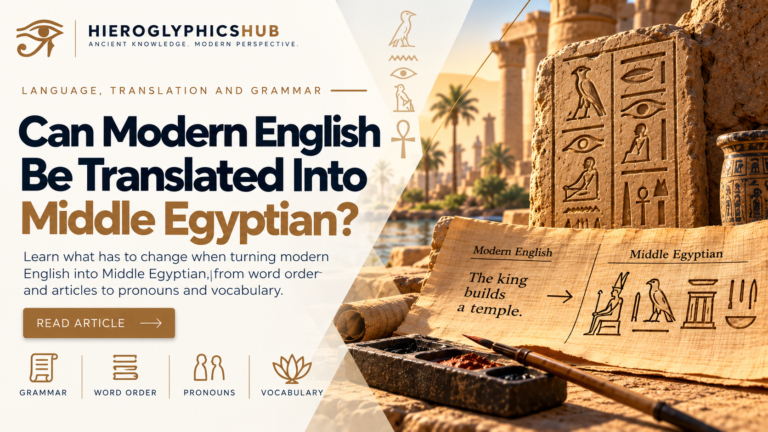
Can Modern English Sentences Be Translated Into Middle Egyptian? What Has to Change
Yes, a modern English sentence can often be expressed in Middle Egyptian
 Blog
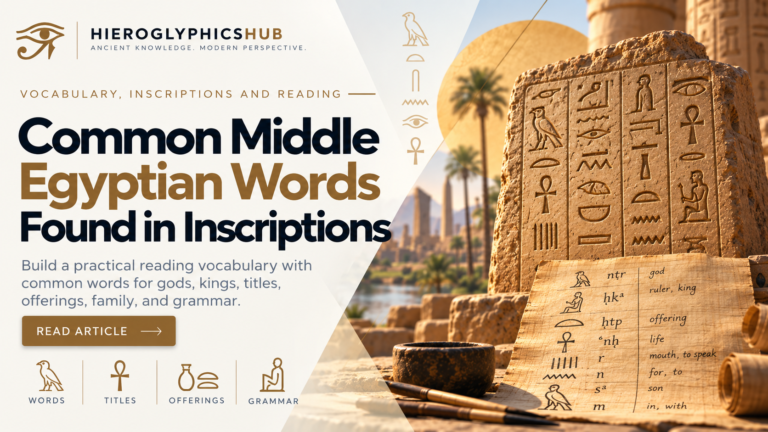
Common Middle Egyptian Words You Actually Meet in Inscriptions
Common Middle Egyptian Words You Actually Meet in Inscriptions Common Middle Egyptian Words You Actually Meet in Inscriptions Middle Egyptian vocabulary becomes much easier when the words come from texts you are actually likely to read. A beginner can memorize dozens of dictionary entries and still struggle with a stela because monumental texts repeatedly use...
 Blog
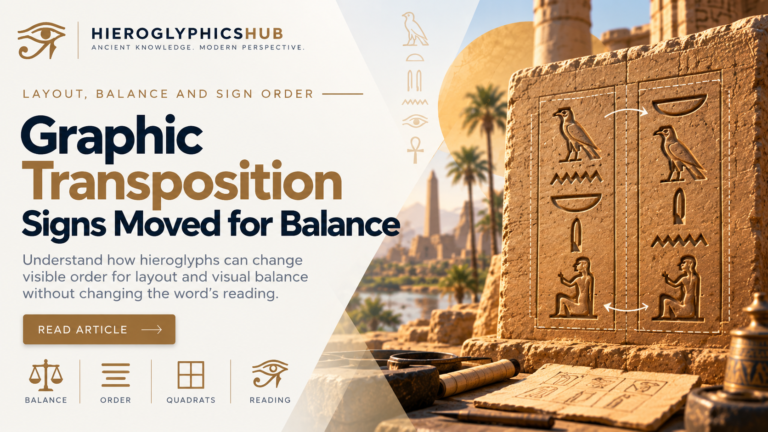
Graphic Transposition: When Hieroglyphs Change Order for Visual Balance
Graphic Transposition Graphic Transposition: When Hieroglyphs Change Order for Visual Balance Egyptian hieroglyphs do not always appear in the same visual order in which their sounds or words are read. Sometimes a sign is moved because the group looks better that way. A narrow sign may fit beside a taller one. A classifier may be...
 Blog
How to Read an Ancient Egyptian Stela: Names, Titles, Offerings, and Layout
How to Read an Ancient Egyptian Stela How to Read an Ancient Egyptian Stela: Names, Titles, Offerings, and Layout An Egyptian stela is not a page with a picture added underneath. The image, inscriptions, names, titles, offerings, gestures, and spatial arrangement all work together. That is why reading a stela sign by sign from the...
 Blog
How Egyptian Scribes Learned to Read and Write
How Egyptian Scribes Learned to Read and Write How Egyptian Scribes Learned to Read and Write Ancient Egyptian scribes did not learn by memorizing a modern-style alphabet and then moving straight into full sentences. Their writing system demanded more. A trainee had to recognize many signs, understand how signs combined into words, learn the conventions...
 Blog
How Ancient Egyptian Personal Names Were Formed and What They Meant
How Ancient Egyptian Personal Names Were Formed and What They Meant How Ancient Egyptian Personal Names Were Formed and What They Meant Ancient Egyptian personal names could be as short as a single word or as long as a complete sentence. Some described the person. Some expressed a parent's hope. Some placed the child in...
 Blog
Hieratic vs Demotic: How Egyptian Everyday Writing Changed
Hieratic vs Demotic Hieratic vs Demotic: How Egyptian Everyday Writing Changed For most of Egyptian history, people did not write ordinary documents by carefully drawing monumental hieroglyphs. They used cursive scripts. For more than two thousand years, the dominant handwritten tradition was hieratic. By the seventh century BCE, a newer and even more cursive script—Demotic—had...
 Blog
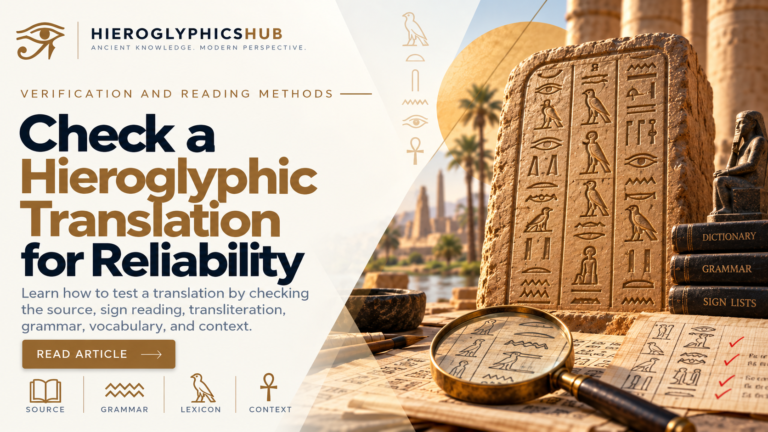
How to Check Whether a Hieroglyphic Translation Is Reliable
How to Check Whether a Hieroglyphic Translation Is Reliable How to Check Whether a Hieroglyphic Translation Is Reliable A hieroglyphic translation can look convincing and still be wrong. The English may sound fluent. The hieroglyphs may look authentic. A few familiar words may even be present. None of that proves that the translation actually follows...
 Blog
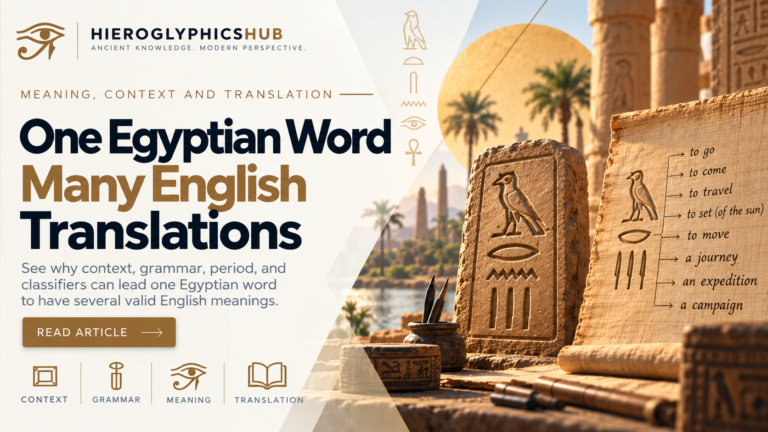
Why One Egyptian Word Can Have More Than One English Translation
Why One Egyptian Word Can Have More Than One English Translation Why One Egyptian Word Can Have More Than One English Translation An Egyptian dictionary may give one word three, five, or even more English equivalents. That does not necessarily mean the dictionary is uncertain. More often, it means no single English word covers the...
 Blog
Cursive Hieroglyphs vs Hieratic: Why They Are Not the Same Thing
Cursive Hieroglyphs vs Hieratic Cursive Hieroglyphs vs Hieratic: Why They Are Not the Same Thing A handwritten Egyptian text can look less detailed than a carved temple inscription without automatically being hieratic. That is the problem at the center of cursive hieroglyphs. Ancient Egyptian writing did not divide neatly into “careful hieroglyphs on stone” and...
 Blog
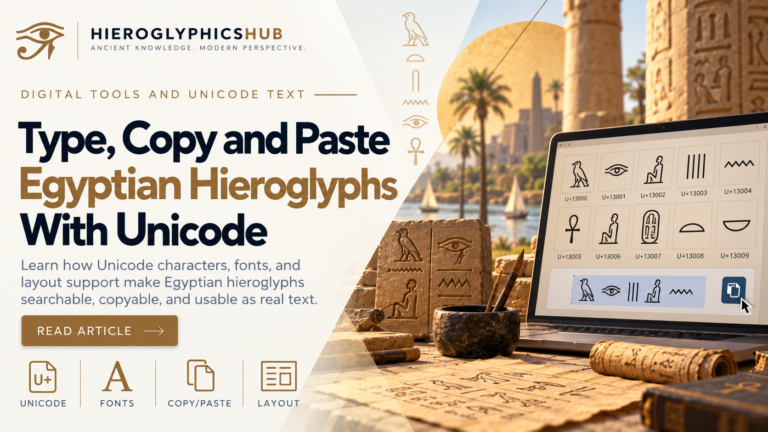
How to Type, Copy, and Paste Egyptian Hieroglyphs With Unicode
How to Type, Copy, and Paste Egyptian Hieroglyphs With Unicode How to Type, Copy, and Paste Egyptian Hieroglyphs With Unicode Egyptian hieroglyphs can be real text. A sign such as 𓅓 does not have to be a screenshot, custom icon, or symbol produced only by specialist Egyptology software. In Unicode-aware applications, it can be stored...
 Blog
How to Read the ḥtp-dỉ-nsw Offering Formula in Egyptian Hieroglyphs
How to Read the ḥtp-dỉ-nsw Offering Formula in Egyptian Hieroglyphs How to Read the ḥtp-dỉ-nsw Offering Formula in Egyptian Hieroglyphs Few Egyptian expressions are as recognizable as ḥtp-dỉ-nsw. It appears on stelae, false doors, coffins, statues, tomb equipment, and other funerary monuments, often followed by a deity, an offering list, and the name of the...
 Blog
Old Egyptian vs Middle Egyptian vs Late Egyptian: How the Language Changed
Old Egyptian vs Middle Egyptian vs Late Egyptian Old Egyptian vs Middle Egyptian vs Late Egyptian: How the Language Changed Ancient Egyptian was written for thousands of years, but it was not the same language throughout that entire span. The Egyptian of the Pyramid Texts is not identical to the language of Middle Kingdom literature,...
 Blog
Honorific Transposition: Why Egyptian Gods and Kings Can Be Written First but Read Later
Honorific Transposition Honorific Transposition: Why Egyptian Gods and Kings Can Be Written First but Read Later Egyptian hieroglyphs usually give readers strong visual clues about order. Then a phrase such as ḥm-nṯr, “servant of the god” or “priest,” appears with the word for god placed before the word for servant. If the signs are read...
 Blog
Egyptian Cartouches Explained: What They Enclose and How to Read Them
Egyptian Cartouches Explained Egyptian Cartouches Explained: What They Enclose and How to Read Them An Egyptian cartouche is easy to recognize: an elongated oval surrounds a group of hieroglyphs, with a short line marking the tied end of the enclosure. What the oval means is less obvious. A cartouche does not translate the signs inside...
 Blog
How Many Egyptian Hieroglyphs Are There? Why the Numbers Differ
How Many Egyptian Hieroglyphs Are There? Why the Numbers Differ How Many Egyptian Hieroglyphs Are There? Why the Numbers Differ Ask how many Egyptian hieroglyphs there are and you can get answers ranging from a few dozen to many thousands. That does not mean Egyptologists cannot count. It means the sources are often counting different...
 Blog
What Did Ancient Egyptians Write On and With? Papyrus, Ostraca, Stone, Ink, and Reed Brushes
What Did Ancient Egyptians Write On and With? Papyrus, Ostraca, Stone, Ink, and Reed Brushes What Did Ancient Egyptians Write On and With? Papyrus, Ostraca, Stone, Ink, and Reed Brushes Ancient Egyptian writing did not have one standard surface and one standard pen. A temple inscription, a household account, a literary manuscript, a school exercise,...
 Blog
Hieroglyphic Quadrats: How Egyptian Signs Are Grouped and Read
Hieroglyphic Quadrats Hieroglyphic Quadrats: How Egyptian Signs Are Grouped and Read Egyptian hieroglyphs are not normally arranged like letters on a modern keyboard line. A short sign may sit above another. Two narrow signs may share a block side by side. A small sign can be tucked into available space beside a larger one. Several...
 Blog
Gardiner’s Sign List Explained: How Egyptologists Identify Hieroglyphs
Gardiner's Sign List Explained Gardiner's Sign List Explained: How Egyptologists Identify Hieroglyphs A code such as G17 looks as though it ought to tell you how a hieroglyph is pronounced. It does not. G17 is an address in a sign catalogue. The G places the sign among birds, and 17 distinguishes it from other signs...
 Blog
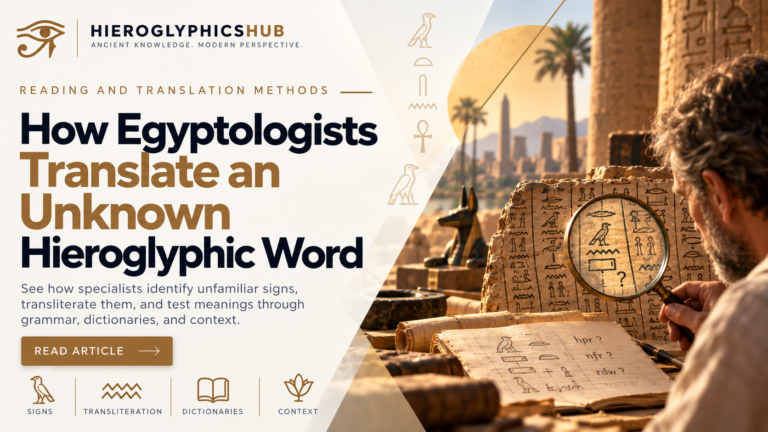
How Egyptologists Translate an Unknown Hieroglyphic Word
How Egyptologists Translate an Unknown Hieroglyphic Word How Egyptologists Translate an Unknown Hieroglyphic Word An unfamiliar group of hieroglyphs does not become a translation as soon as its signs are recognized. Recognition only establishes what may be written. Translation requires a second investigation: which signs carry sounds, which signs clarify meaning, what consonantal sequence belongs...
 Blog
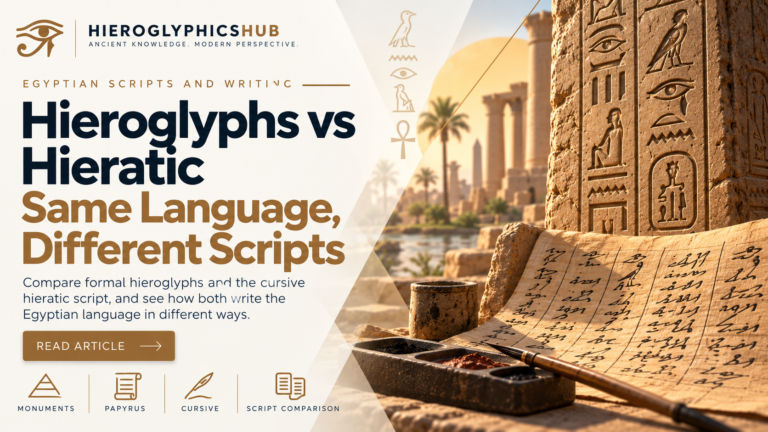
Hieroglyphs vs Hieratic: Same Language, Different Egyptian Scripts
Hieroglyphs vs Hieratic Hieroglyphs vs Hieratic: Same Language, Different Egyptian Scripts Place a carefully carved temple inscription beside an Egyptian letter written rapidly in ink on papyrus and they can look as though they belong to different writing systems. Often, they do not. The formal inscription may be written in hieroglyphs. The handwritten document may...
 Blog
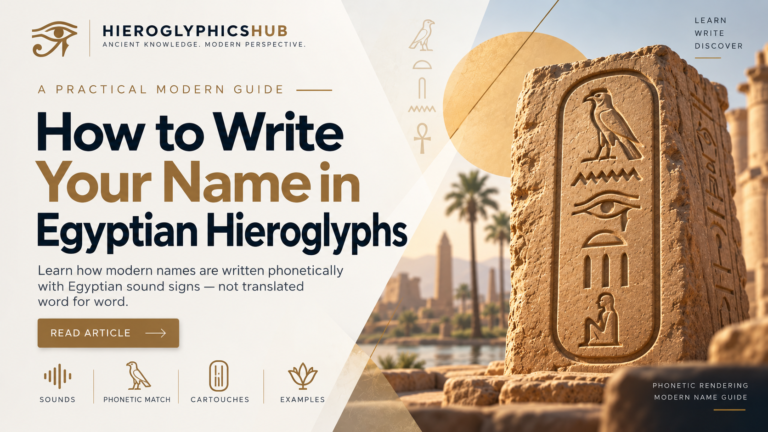
How to Write Your Name in Egyptian Hieroglyphs
Write your name in hieroglyphics How to Write Your Name in Egyptian Hieroglyphs Without Mistaking It for a Translation Writing a modern name in Egyptian hieroglyphs can be useful, educational, and visually striking. It is also easy to describe incorrectly. If you write Michael, Sarah, Daniel, or Amina with hieroglyphic sound signs, you are usually...
 Blog
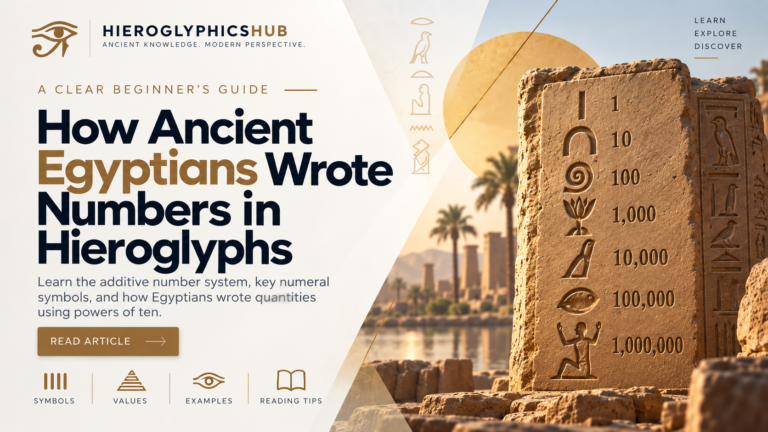
How Ancient Egyptians Wrote Numbers in Hieroglyphs
Egyptian hieroglyphic numbers How Ancient Egyptians Wrote Numbers in Hieroglyphs Ancient Egyptian numbers are easier to understand once you stop looking for the digits 0 through 9. The hieroglyphic numeral system did not work like modern positional notation. There was no single digit whose value changed because it appeared in the ones, tens, or hundreds...
 Blog
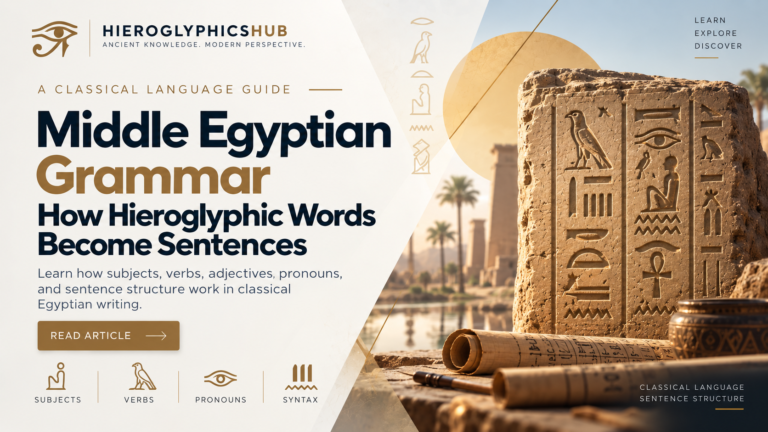
How Hieroglyphics Words Become Sentence
Middle Egyptian grammar Middle Egyptian Grammar: How Hieroglyphic Words Become Sentences You can identify every sign in an Egyptian inscription and still misunderstand the sentence. That is because reading hieroglyphs has two separate problems. The first is working out what the signs represent. The second is understanding how the resulting Egyptian words relate to one...
 Blog
What Did Ancient Egyptian Sound Like?
Ancient Egyptian pronunciation What Did Ancient Egyptian Sound Like? Vowels, Pronunciation, and Reconstruction Egyptologists routinely pronounce words that the hieroglyphs never fully spelled. The familiar transliteration nfr, for example, is often spoken approximately as nefer. Yet the two inserted vowels are not sitting invisibly inside the three hieroglyphic consonants waiting to be read. They are...
 Blog
How Egyptologists Transliterate Hieroglyphics
Egyptian hieroglyphs transliteration How Egyptologists Transliterate Hieroglyphs A row of hieroglyphs and a line such as nfr, pr, or ꜥnḫ can represent the same Egyptian word in two different forms. The first is the original script. The second is transliteration: a scholarly way of representing Egyptian linguistic values with characters that can be typed, searched,...
 Blog
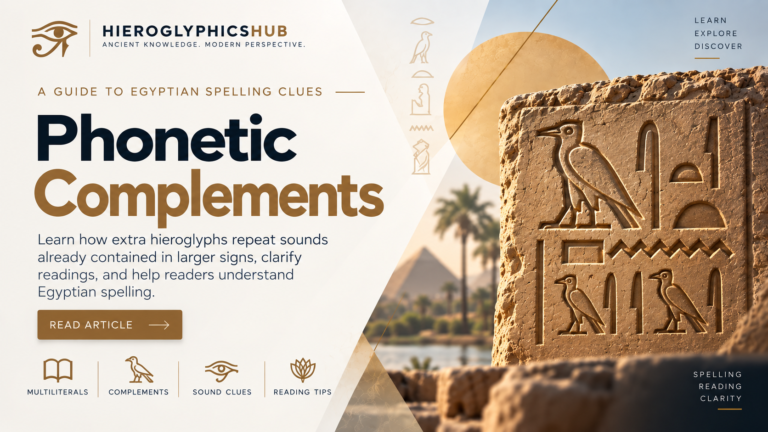
Why Do Hieroglyphics Repeat Sounds?
Phonetic complements in hieroglyphs Why Do Hieroglyphs Repeat Sounds? Understanding Phonetic Complements A hieroglyph already represents nfr. Then the scribe writes f and r after it. Should the result be read nfrfr? No. The extra signs can repeat sounds that are already contained in the larger hieroglyph. They are not necessarily adding new consonants to...
 Blog
The Silent Hieroglyphics
Determinatives in Egyptian hieroglyphs Determinatives: The Silent Hieroglyphs That Help Reveal Meaning Ancient Egyptian writing often tells you something about a word that its pronunciation alone does not. A group of hieroglyphs may supply the consonants of a word, followed by another sign that is not pronounced at all. That final sign might show a...
 Blog
Biliteral and Triliteral Signs in Egyptian
Biliteral and triliteral hieroglyphs Beyond the Alphabet: Biliteral and Triliteral Signs in Egyptian Hieroglyphs Imagine finding the hieroglyph 𓄤 in an inscription. A beginner who has learned the one-consonant signs may try to break the shape into a single letter. That will not work. The sign can carry the consonantal sequence nfr: three consonants represented...
 Blog
Hieroglyphics Symbols & Meanings
Hieroglyphic symbols and meanings Hieroglyphic Symbols and Meanings: What Common Egyptian Signs Actually Do An owl appears in an Egyptian inscription. What does it mean? If hieroglyphs were a collection of picture symbols, the answer might be “owl.” In many Egyptian words, however, the owl sign contributes the consonantal value m. The bird in the...
 Blog
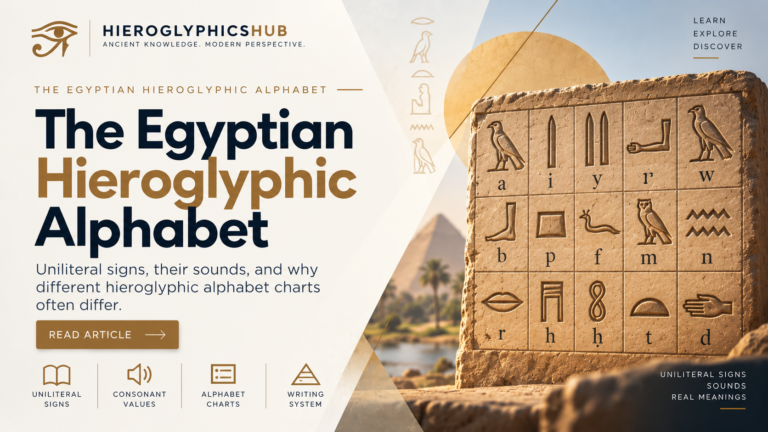
The Egyptian Hieroglyphic Alphabet
Egyptian hieroglyphic alphabet The Egyptian Hieroglyphic Alphabet: Uniliteral Signs, Sounds, and Why Charts Differ Search for an Egyptian hieroglyphic alphabet and you will usually find a neat chart that pairs birds, snakes, hands, and other signs with English letters from A to Z. Such charts can be useful, but they can also create the wrong...
 Blog
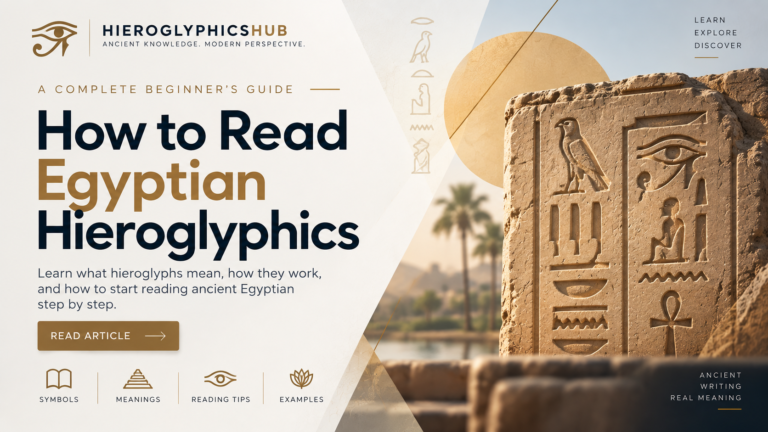
How To Read Egyptian Hieroglyphics
Egyptian hieroglyphics guide How to Read Egyptian Hieroglyphics: A Practical Guide for Beginners Reading Egyptian hieroglyphics is not a matter of looking at each picture and finding its English equivalent. A beginner may see a bird, an eye, a seated person, or a reed leaf and naturally ask what each picture means. That is a...
 Blog
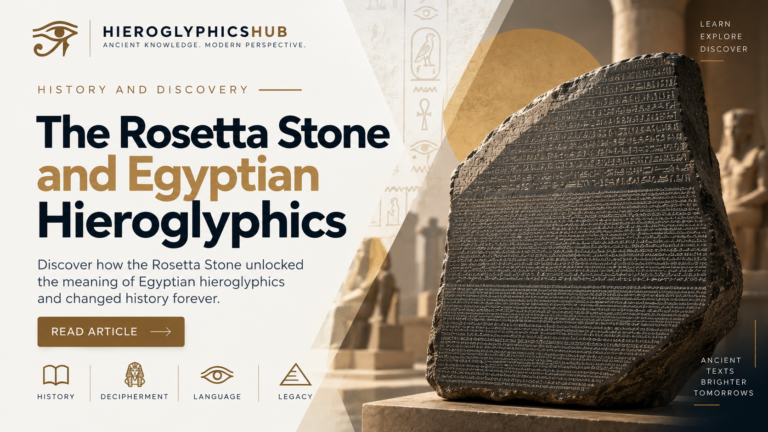
Rosetta Stone And Egyptian Hieroglyphics
Rosetta Stone and Egyptian Hieroglyphics: How the Lost Script Was Deciphered For nearly 1,400 years, the meaning of Egyptian hieroglyphs had been lost. The monuments were still standing. Temples were still covered with inscriptions. Names of kings, religious texts, administrative records, and thousands of other written signs remained visible across Egypt. What had disappeared was...
 Blog
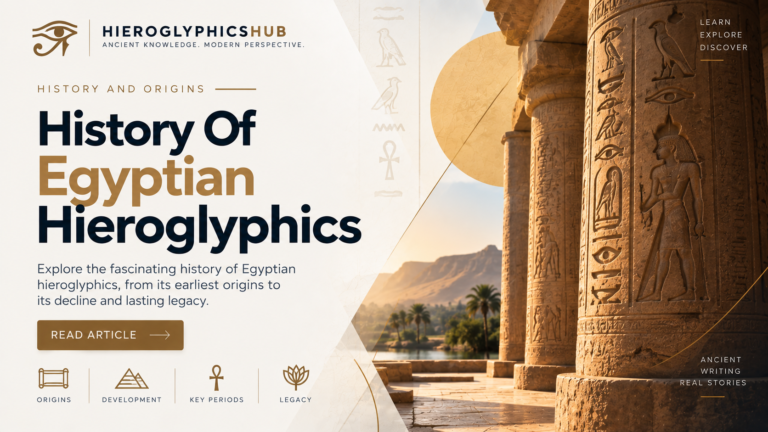
History Of Egyptian Hieroglyphics
History of Egyptian Hieroglyphics: From the First Signs to the Last Inscription Egyptian hieroglyphics were not created as a finished writing system and then left unchanged for thousands of years. They developed alongside Egyptian society, language, administration, religion, literature, and political power. The earliest known Egyptian writing appears around the late fourth millennium BC. From...
 Blog
How Egyptian Hieroglyphics Work
How Egyptian Hieroglyphics Work Egyptian hieroglyphics work by combining signs that can represent sounds, words, and semantic information within the same writing system. A single sign may contribute one consonant, several consonants, a complete word, or information that helps clarify the meaning of a word. Additional signs can reinforce pronunciation or identify the semantic category...
 Blog
What Are Egyptian Hieroglyphics
What Are Egyptian Hieroglyphics? Egyptian hieroglyphics are the writing system used to write the ancient Egyptian language. The signs are famous for depicting people, animals, plants, objects, and other recognizable forms, but they were not simply pictures. Egyptian scribes used hieroglyphs to represent sounds, words, and semantic information, creating a writing system capable of recording...
There is more behind every sign.
Explore the translator and discover how Egyptian hieroglyphic writing connects signs, sounds, words, and meaning.